Operational scalability is not just a buzzword; it is a critical component that allows businesses to grow while minimizing chaos. To truly understand its significance, we must explore its core principles and how they apply in real-world scenarios, especially in the context of scalable business operations.

← What we do

What Creates Scalable Business Operations?

Understanding operational scalability is essential for businesses looking to grow efficiently. It refers to the ability of an organization to grow without being hampered by its existing structure or available resources. This means that businesses can handle increased demand without sacrificing performance, quality, or profitability, leading to effective scalable business operations.

By focusing on operational scalability, businesses can enhance their growth strategies and achieve long-term success. This encompasses everything from workflow optimization to employee training, ensuring that all aspects of the organization are aligned towards sustainable growth.

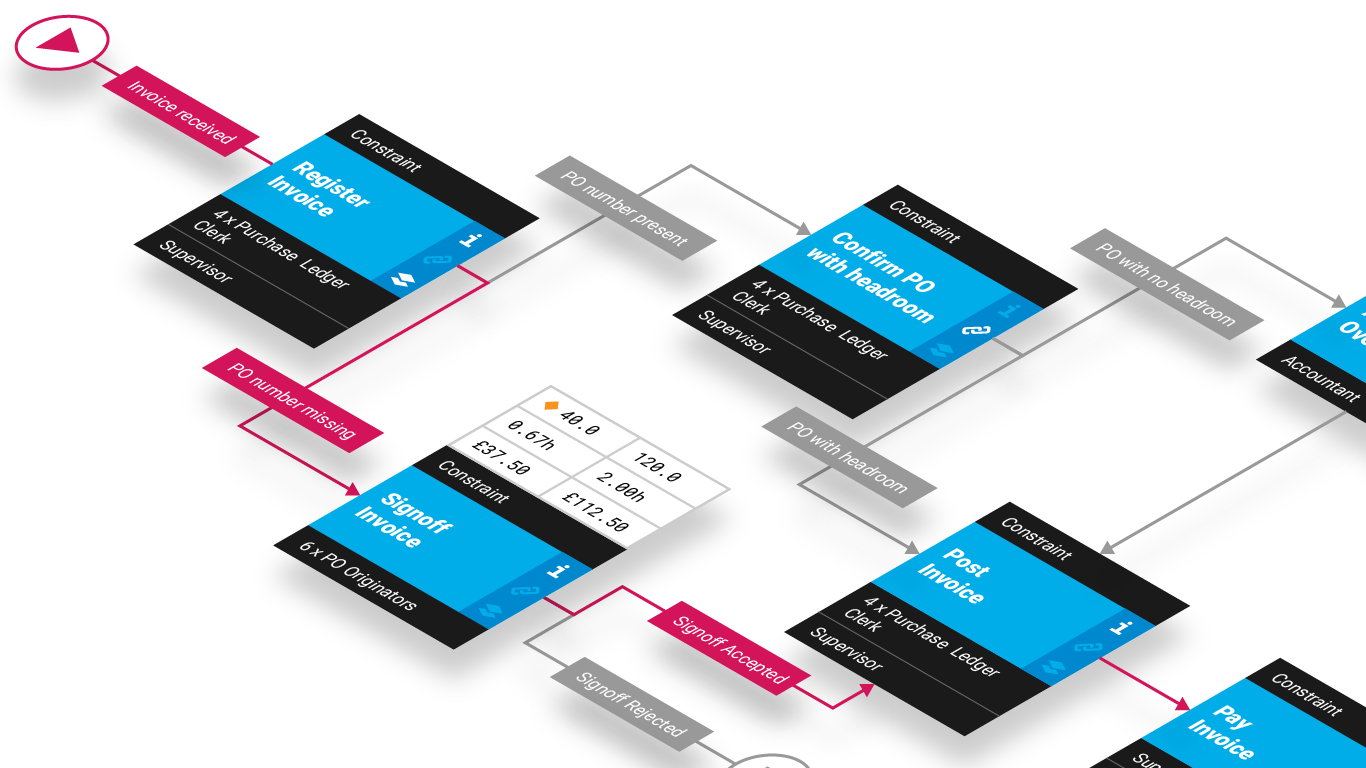
Isoma Isometric Process 2

Sustainable growth requires more than technology, documentation or analysis.

For instance, consider a small e-commerce company that experiences a sudden spike in sales. Without operational scalability, the company might struggle to fulfill orders on time, leading to unhappy customers. However, by implementing scalable systems and processes, they can easily adjust their operations, hire temporary staff, or automate certain tasks to meet demand efficiently.

It requires a clear operational system that defines how work is performed, who is accountable, how performance is measured and how risks are controlled.

Implementing operational scalability allows for the efficient allocation of resources, ensuring that all parts of the organization work harmoniouslyE-Squared helps organisations build the operational foundation for scalable business operations — creating the structure, visibility and control needed to support growth without increasing dependency on individuals.

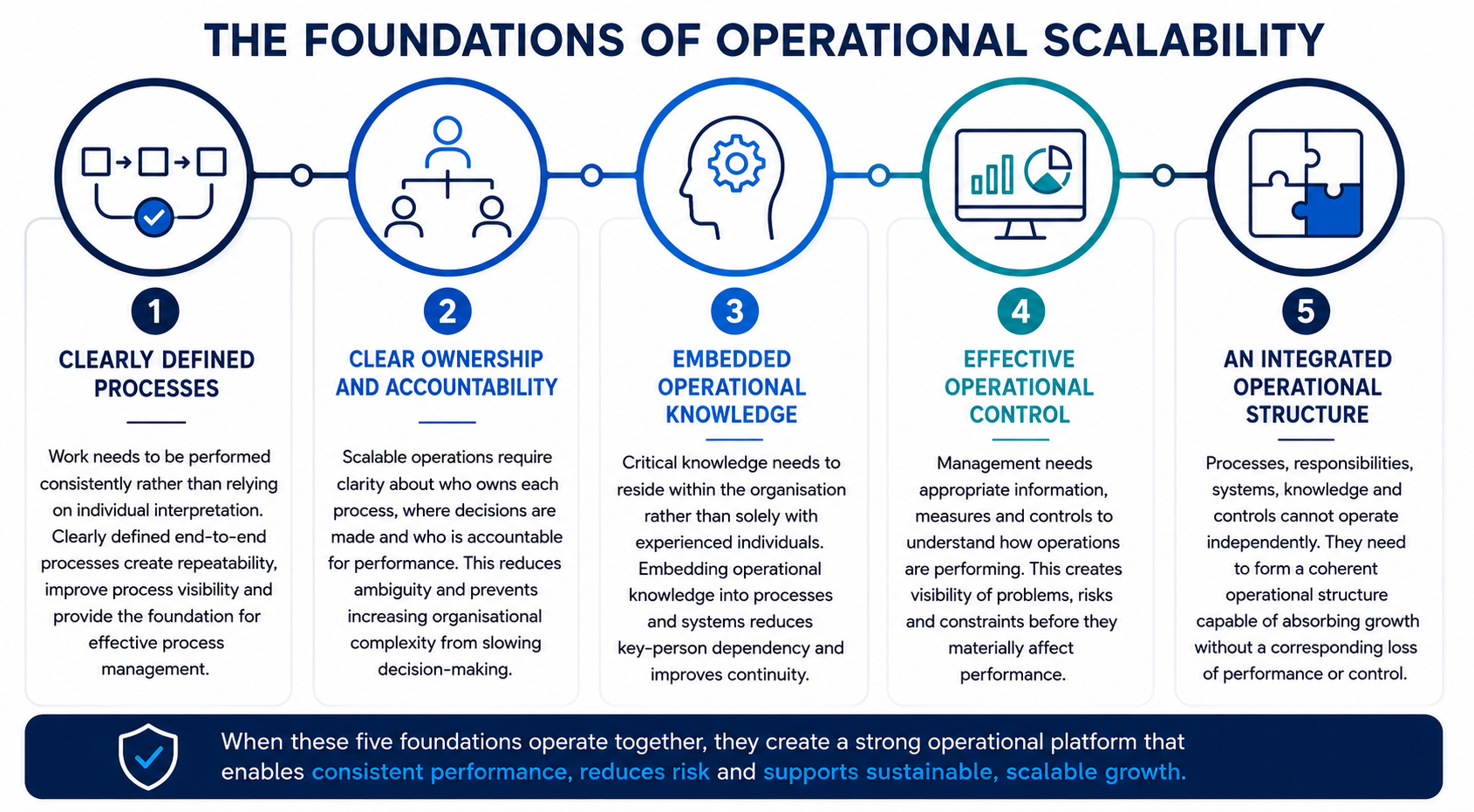
The 5 foundations of scalable business operations

The 5 foundations of operational scalability are crucial to establishing a strong framework. This includes effective communication, defined roles, performance metrics, resource management, and technology implementation. Each foundation supports the others, creating an ecosystem where growth can occur seamlessly.

Every organization aiming for operational scalability must prioritize the establishment of a robust framework. This framework includes clear documentation of processes, a culture of continuous improvement, and the active involvement of all team members in the scalability initiative.

Scalable business operations depend on more than improving individual processes.  It requires clearly defined ways of working, clear ownership and accountability, embedded operational knowledge, effective management control and an integrated operational structure. When these foundations work together, the organisation becomes less dependent on individuals, gains greater visibility and control, and is better able to absorb growth and change without increasing operational complexity.

foundations of scalable business operations

From individual processes to a management system

Improving individual processes can produce worthwhile efficiency gains, but operational scalability requires more than isolated process improvement.

Operational scalability is crucial in today’s fast-paced business environment, as it facilitates adaptability and responsiveness to market changes. Companies that can scale their operations efficiently are better positioned to seize new opportunities and respond to challenges quickly.

As an organisation grows, its processes become increasingly interconnected. Work, information and responsibilities move between teams and systems, so problems in one area increasingly affect performance elsewhere.

As an organization grows, processes become increasingly interconnected. The output of one team becomes the input of another; information moves between systems; responsibilities cross departmental boundaries; and decisions made in one part of the organization can have significant effects on performance elsewhere. For example, if a sales team does not communicate effectively with the supply chain, it can lead to stock shortages or overstock issues, demonstrating the need for an integrated operational approach.

To achieve operational scalability, organizations must integrate their processes seamlessly for sustained growth.

Effective business process management therefore requires an end-to-end view of how the organisation operates. Processes need defined ownership, appropriate controls and reliable management information, while the knowledge required to perform them must be accessible to the people who need it.

When these elements operate together, they form a process management system rather than simply a collection of documented processes.

This provides the operational foundation for greater consistency, operational efficiency, resilience and scalable growth. It also creates a stronger foundation for automation and AI because technology is being applied to processes that are already understood, controlled and repeatable.

This interconnectedness highlights the importance of a comprehensive view of business processes. When organizations take a holistic approach, they can pinpoint inefficiencies, streamline workflows, and ultimately enhance productivity across the board. Regular reviews of these integrated processes also ensure that they remain aligned with the organization’s goals.

Building the operational structure required to scale

Building the operational structure required to scale involves not only identifying the necessary components but also understanding how they interact. For example, a strong IT infrastructure supports operational scalability by enabling data flow and communications that are essential for coordinated efforts across departments.

E-Squared approaches this as an organisational problem rather than a series of isolated process problems.

Our Operational Scalability Methodology™ (OSM) assesses the organisation as a connected operating environment. It identifies where structure, processes, responsibilities, knowledge, systems or controls are constraining scalability and establishes the priorities for improvement.

Our approach to operational scalability includes identifying key areas that can be optimized for better performance.

Where intervention is required, E-Squared works with the people who understand and perform the work to create and implement the necessary Critical Process Management System.

The objective is not simply better documentation or recommendations. It is an implemented operational system that enables work to be performed consistently, gives management greater visibility and control, reduces dependency on individuals and provides a stronger foundation for continued growth.

Moreover, implementing a robust operational system can facilitate knowledge sharing among employees. This ensures that vital information and best practices are easily accessible, fostering a culture of learning and improvement that is essential for scaling operations effectively.

With an effective operational scalability strategy, organizations can expect to improve their overall efficiency and reduce errors.

A coherent operational structure enables an organisation to scale without continually adding complexity, management intervention and operational risk.