
A Critical Process Management System brings together the processes, responsibilities, controls and management information an organisation needs to operate consistently and scale effectively.
“Critical” means concentrating on the processes that have the greatest impact on growth, performance, customer outcomes and operational risk — not attempting to document everything.
Why implementation matters
Documenting processes is not enough. A process management system only creates value when the agreed ways of working are understood, adopted and maintained within day-to-day operations.
Moreover, the implementation of a process management system allows organizations to adapt more rapidly to changes in the market. This agility is crucial in today’s fast-paced business environment.
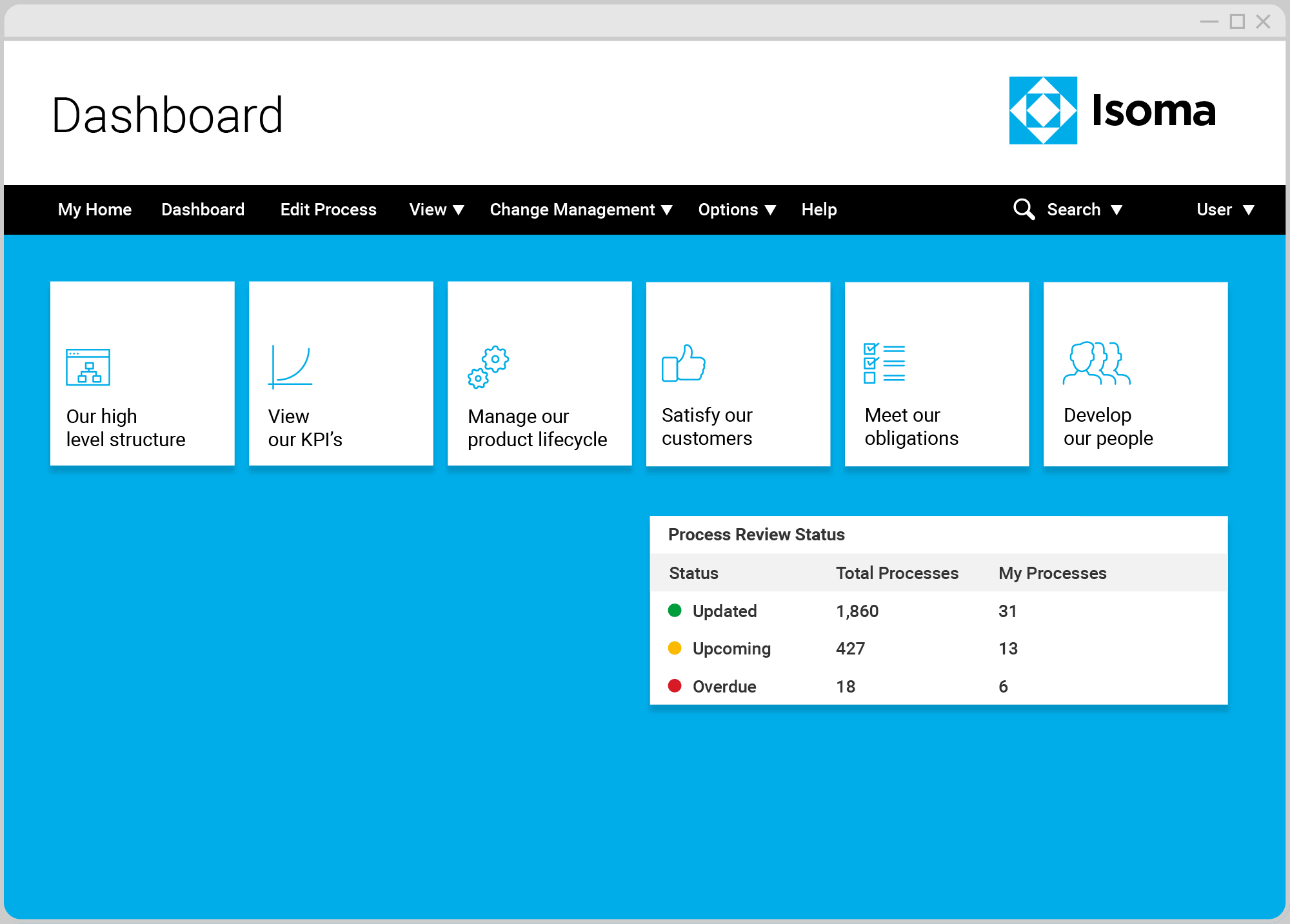
Implementation therefore focuses on turning operational knowledge into a working system that gives people clarity about how work should be performed.
How the implementation works
The eight-stage implementation process provides a structured route from identifying the critical processes through to embedding a working management system within the organisation. Each stage builds on the last, combining existing operational knowledge with clear process design, ownership, controls and management information to create a system that can be maintained and developed as the organisation grows.
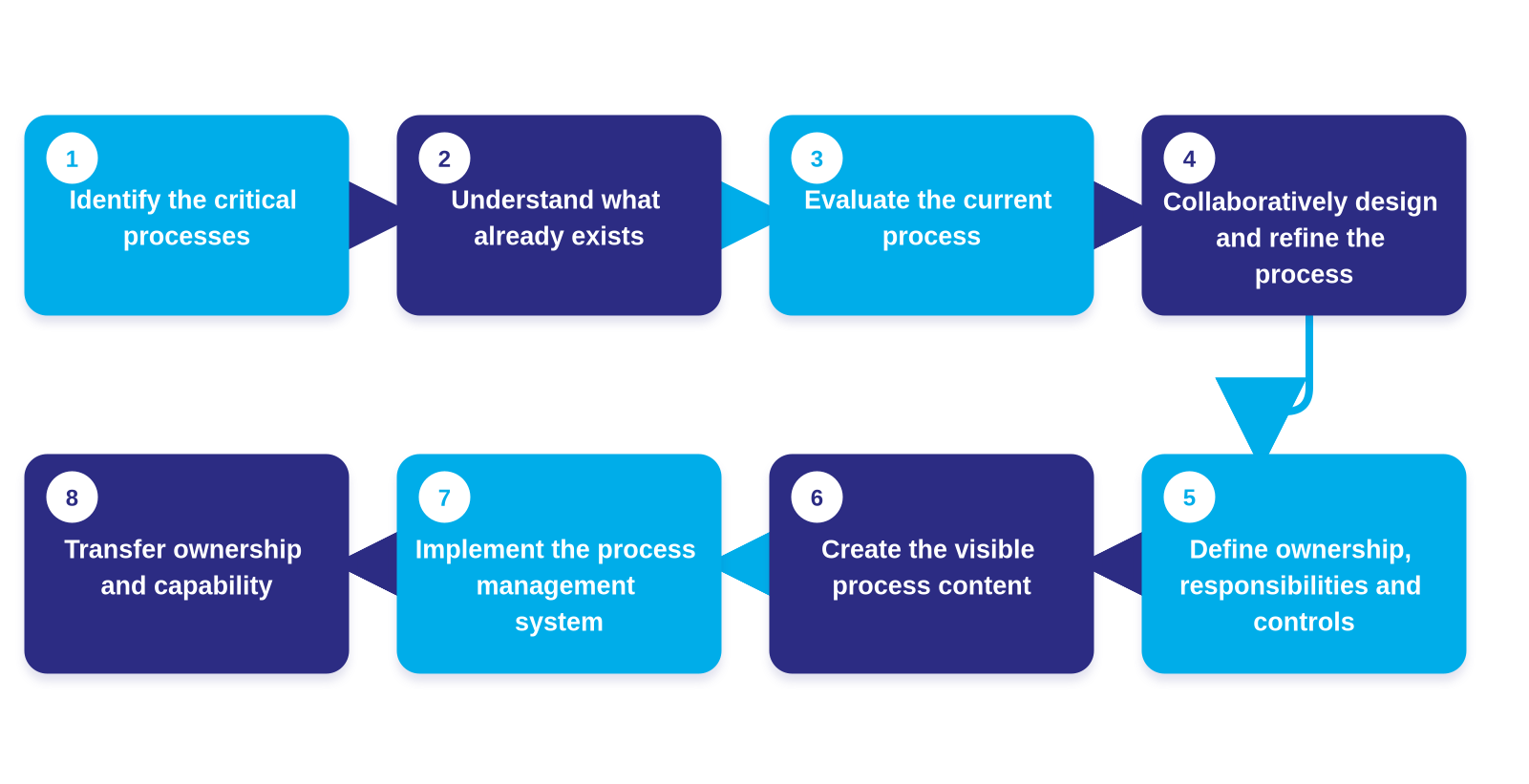
We work with leaders, process owners and subject-matter experts to identify the processes that have the greatest effect on growth, performance, customer outcomes and operational risk.
We establish how the work is currently performed and gather any existing process material, including informal practices, diagrams, procedures, controls, system workflows and supporting information.
We examine the existing process with the people involved to identify gaps, inconsistencies, dependencies, unnecessary complexity and opportunities for improvement.
We work with the people who lead, perform and understand the work to agree how the process should operate. Existing processes are retained and improved where appropriate; missing elements are created collaboratively.
We clarify who owns the process, who performs its activities, how decisions are made, which controls are required and how performance should be monitored.
E‑Squared completes the demanding work of structuring and creating the process content, based on the design agreed with the organisation’s leaders, process owners and subject-matter experts.
The agreed processes, responsibilities, controls and supporting information are brought together within one visible and maintainable system. This becomes the organisation’s trusted reference for how its critical work operates.
We train the relevant people to use, maintain and develop the system themselves, enabling it to remain current as the organisation grows and changes.
Establishing clear ownership within the implementation process is vital. For example, assigning a process owner ensures accountability, which is crucial for maintaining the system long-term. This person acts as a liaison between teams and management, facilitating communication and driving adherence to the agreed processes.
Built with the people who understand the work
E-Squared does not design processes in isolation. We combine our process-design and implementation expertise with the operational knowledge of the people who lead, perform and understand the work.
Furthermore, involving employees in the design and implementation stages fosters a sense of ownership and commitment.
Existing processes are retained and improved where appropriate, while missing elements are created collaboratively. This ensures that the resulting system reflects operational reality rather than an externally imposed model.
Finally, as organizations grow, their process management systems should evolve. Regular reviews and updates, informed by employee feedback and performance data, ensure that the system remains relevant and effective.